
odk.design
Stratified wooden vases, carved by an industrial robot from hundreds of layers of beech.
AESTUS in production, 2018
Watch the full film on VimeoAESTUS
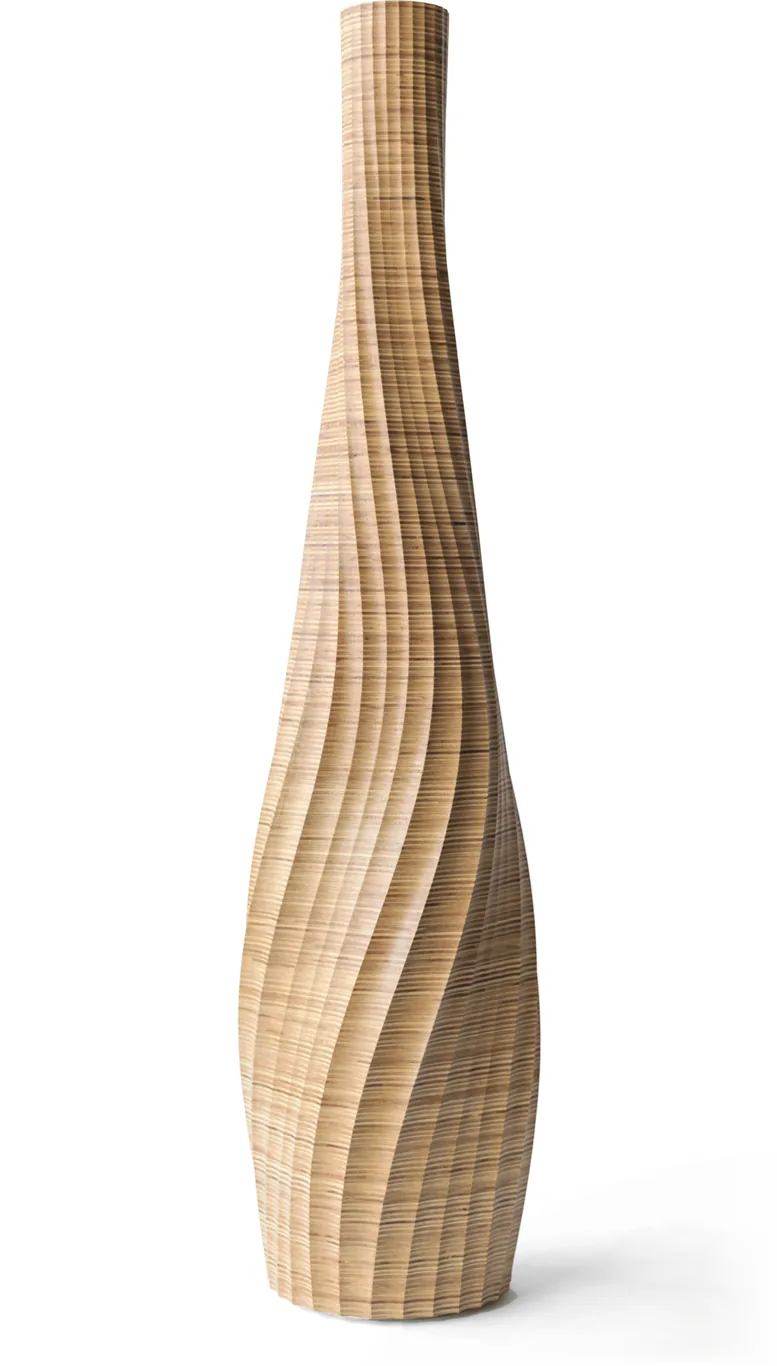
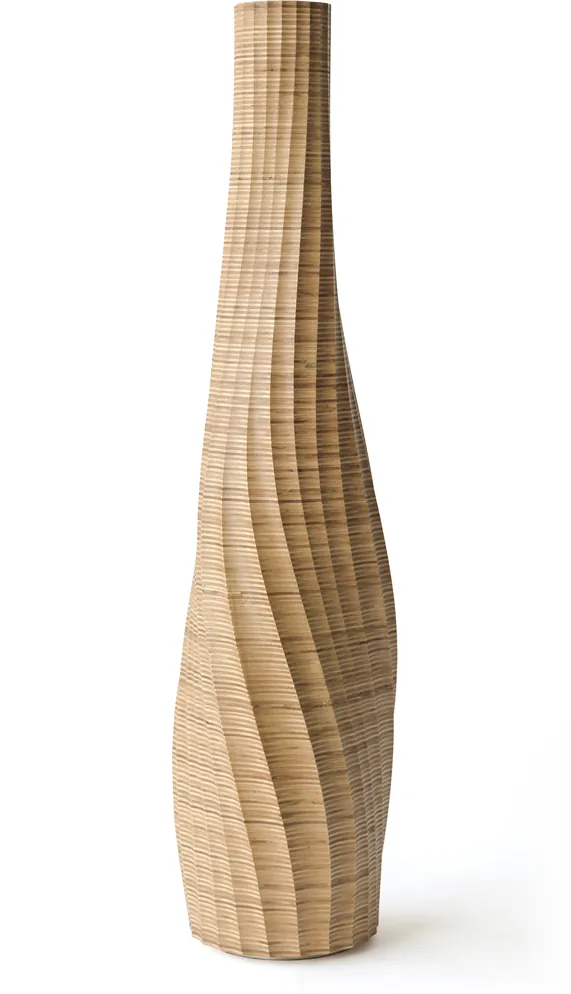
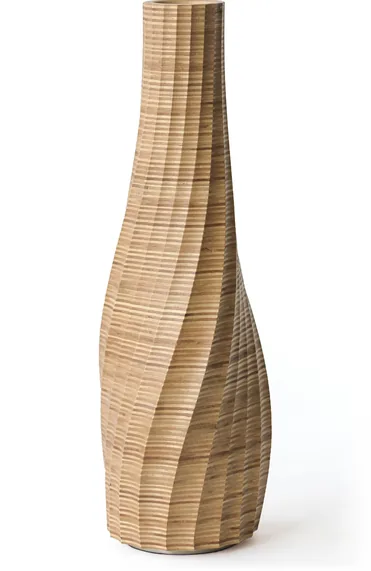
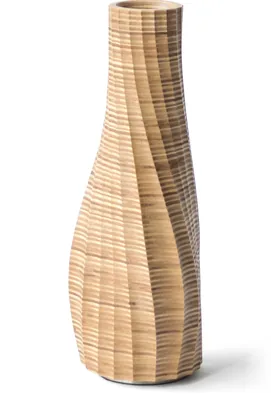
A series of four stratified wooden vases. An industrial robot carves each one from hundreds of layers of beech, and the grooves it leaves behind hold the fluid movement of the machine in the depth of the wood.
The series brings a traditional material together with a contemporary way of making. Grain, colour and texture vary with the wood, so no two vases look the same. They stand on their own or together as a group.
- Body
- Laminated beech plywood
- Lip
- Brushed stainless steel inset that holds the water
- Base
- Setback platform on a ring of felt
- Finish
- Natural wax
- Designed
- 2018, by Oliver David Krieg
-
L
-
M
-
S
-
XS
| Size | Height × width | Weight |
|---|---|---|
| L | 110 × 25 cm | 23 kg |
| M | 80 × 19 cm | 10 kg |
| S | 46 × 15 cm | 4 kg |
| XS | 32 × 11 cm | 2 kg |
Process
AESTUS is produced with the carpentry Georg Ackermann GmbH. The design data transfers directly into production, so one digital model carries each vase from the first shape to the finished piece.
-

Design
Each shape is developed in parametric design software, together with simulation tools written for the project to study how the milling tool meets the material. The same model generates the robot's toolpaths.
-

Lamination
Hundreds of layers of beech plywood are hand-picked and laminated into one solid block. The layers stay hidden until the carving opens them up.
-

Robotic carving
A 7-axis industrial robot mills the block into shape. The toolpaths follow the robot's own kinematics, so every groove balances the cutting force of the tool against the precise movement of the machine. The carving reveals the grain and the edge of each layer.
-

Finishing
Each vase is sanded by hand. A brushed stainless steel cylinder is set into the lip as a water reservoir and ends underneath as a setback platform on a ring of felt. A wax finish protects the wood and keeps it easy to clean.


Interiors


Awards and exhibitions
Awards
- Rado Star Prize Canada, Prix du Jury
- A' Design Award, Gold
- International Design Awards
- Interior Product Design Award
- ExpoWanted
Exhibitions
- IDS Toronto
- DesignTO, Toronto
- Hot New Next, Vancouver

Contact
For questions about AESTUS, press requests or collaborations, write to Oliver David Krieg.